



An investigation into a south-west Sydney council race marred by allegations of doxxing, corruption claims, and physical confrontations
Based on reporting by The Sydney Morning Herald – Anthony Segaert 16th April 2026
The Incident
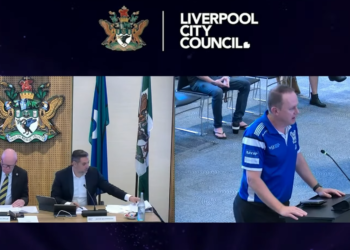
What should have been a routine pre-poll day at Casula Community Centre descended into chaos on Thursday afternoon when Liverpool Liberal councillor Richard Ammoun and independent byelection candidate Jamal Daoud engaged in a heated verbal altercation that required police intervention.
The confrontation, witnessed by electoral workers and voters, represents the latest flashpoint in what has become one of the most contentious local government races in recent Sydney history—a byelection triggered by the January resignation of deputy mayor Betty Green that will see approximately 82,000 residents return to the polls this Saturday.
Competing Narratives
The accounts of what transpired differ sharply depending on who’s telling the story.
Daoud’s version: The independent candidate, who previously contested the federal seat of Werriwa, alleges he was branded a liar by Ammoun after raising corruption concerns about Liverpool City Council. More seriously, Daoud claims a Liberal supporter hurled a deeply personal insult in Arabic: “your father is a son of a bitch.”
“I needed at that time to say a few bad words about him,” Daoud told the Herald. “Not bad, but I said ‘Shut your mouth’, or something like that. You can’t talk about my father like this, especially [because] he is a dead person now.”
The incident has prompted Daoud to take the extraordinary step of wearing a bodycam for the campaign’s final days—a measure more commonly associated with law enforcement than local politics.
Ammoun’s version: The Liberal councillor maintains he was simply correcting misinformation when the situation escalated.
“He was just saying things that were untrue to constituents, I tried to correct him,” Ammoun said. “He started calling me names in his native language. I remained calm, even while the police were there.”
An electoral worker called NSW Police to the scene. A police spokesperson confirmed officers attended regarding “a civil matter” but left without incident.
The Doxxing Controversy
The polling booth confrontation came just 24 hours after an even more troubling incident involving Liverpool’s Liberal mayor, Ned Mannoun.
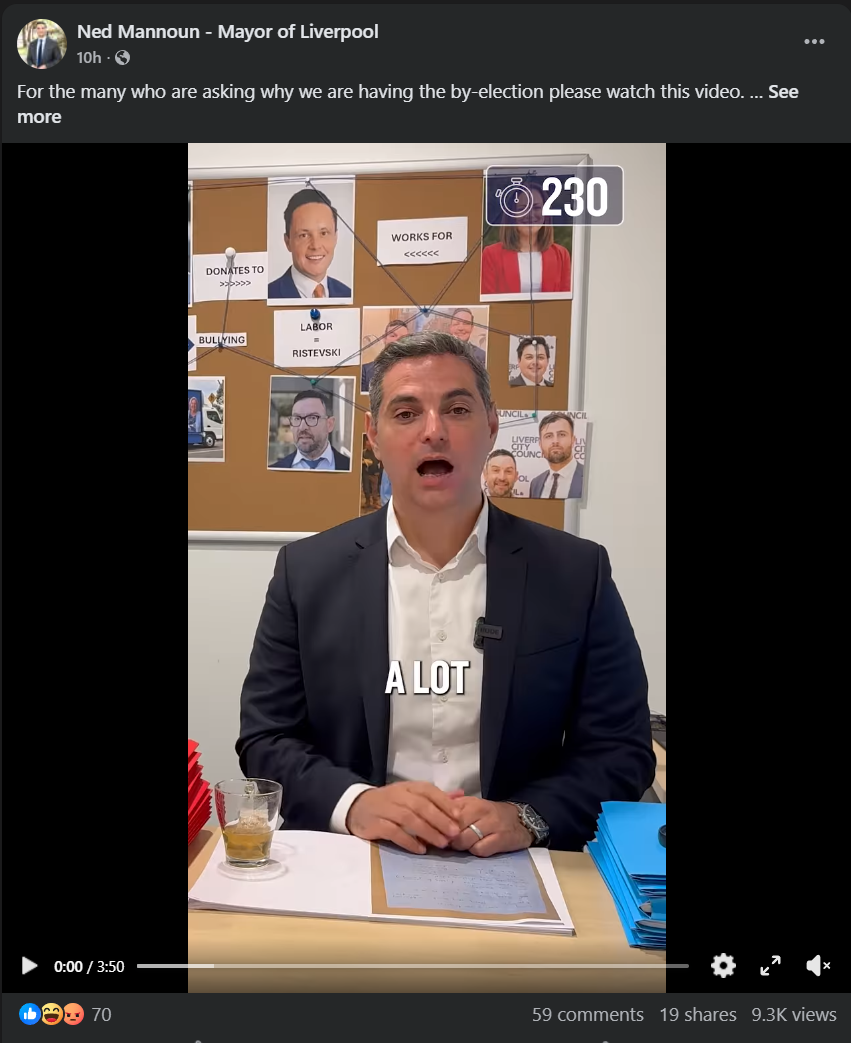
On Wednesday night, Mannoun posted a nearly four-minute Facebook video that could have been lifted from a conspiracy thriller. Sitting before a corkboard displaying photographs of his political rivals connected by pins and string, the mayor delivered what he called “the cold, hard truth” about council politics.
But for approximately three seconds during the video—as Mannoun discussed United Services Union donations to Labor—the footage displayed an election donation disclosure form containing the unredacted home addresses of Labor state MP Charishma Kaliyanda and former deputy mayor Betty Green.
“Does This Mean I Need to Move House?”
Kaliyanda, a former Liverpool councillor herself, didn’t mince words about the breach.
“I’m getting advice about what my options are,” she said. “Does this mean that I need to move house? What does this mean in terms of safety and security measures that I need to put in place for myself and my family?”
The MP characterized the incident as “doxxing”—the malicious publication of private information online, often with the intent to intimidate or harass.
Mannoun’s response fell short of a full apology. “I’m sorry that a publicly available document was published,” he said, emphasizing that the individuals whose addresses were exposed weren’t mentioned by name in the video and that the text was “barely legible.”
By Thursday morning, the mayor had removed the original video and re-uploaded a version with the sensitive information blurred. But the damage, Kaliyanda argues, was already done.
Questions That Demand Answers
This investigation raises several critical concerns:
1. Electoral Integrity: When candidates and councillors engage in physical confrontations at polling places, what message does that send to voters about the democratic process?
2. Data Protection: While donation disclosure forms may be public documents, does that justify broadcasting private residential addresses to thousands of social media followers? What duty of care do elected officials have when handling such information?
3. Escalation Patterns: The fact that a candidate now feels compelled to wear a bodycam suggests a campaign environment that has become genuinely threatening. What safeguards exist to protect candidates and voters?
4. Accountability: Mannoun’s non-apology apology—expressing regret that a “publicly available document was published” rather than taking responsibility for publishing it—raises questions about leadership accountability at the council.
What Happens Next?
As of Thursday, Mannoun indicated he plans to continue his social media campaign. “Wait for my next video,” he told reporters—a statement that may concern those already worried about the campaign’s trajectory.
The byelection will proceed as scheduled on Saturday, but the incidents of the past 48 hours have cast a long shadow over the democratic process in Liverpool.
NSW Police have not indicated whether any charges will be laid in connection with either incident. Kaliyanda is reportedly seeking legal advice about her options regarding the address disclosure.
Context: Liverpool’s Troubled Political Landscape
Liverpool City Council has long been one of Sydney’s most politically volatile local government areas. The south ward byelection was triggered by Betty Green’s resignation in January—itself part of a broader pattern of instability at the council.
The confrontation between Ammoun and Daoud, centered on allegations of council corruption, suggests that deeper governance issues may be at play beyond the immediate campaign drama.
Editor’s Note: This article is based on original reporting by The Sydney Morning Herald. The incidents described occurred during an active election campaign, and readers should note that allegations of corruption have not been substantiated by independent investigation.
What began as a routine council byelection has exposed troubling questions about political conduct, personal safety, and the health of local democracy in south-west Sydney. As voters head to the polls Saturday, they face a choice not just between candidates, but about what standards of behavior they’ll accept from their elected representatives.