




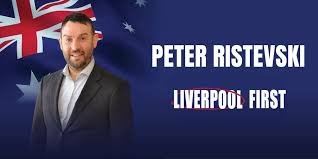

Originally Reported by The Daily Telegraph 19/2/2026.
Independent Liverpool councillor Peter Ristevski is pursuing significant legal action against his council, seeking $500,000 in damages from the NSW Supreme Court relating to code of conduct complaints lodged against him. The move comes as Councillor Peter Ristevski contends the council’s handling of complaints has damaged his standing in the community without adequate justification.
The claim represents the latest chapter in a bitter dispute between the independent councillor and the council administration—a saga marked by escalating hostilities, failed defamation litigation, and a sprawling public inquiry into governance breakdowns.
The Nature of the Dispute
At its core, Ristevski’s claim alleges the council has mismanaged complaints lodged through the Local Government Act 1993 code of conduct mechanism. These complaints represent a formal channel for investigating concerns about councillor conduct and can result in disciplinary outcomes ranging from censure through to removal from office. Yet the framework is equally intended to safeguard the procedural fairness rights of those under investigation—guaranteeing they receive proper notice of accusations and a genuine opportunity to respond.
The timing of Ristevski’s legal push is telling. Recent data tells a striking story: Liverpool City Council has been hit by an extraordinary spike in code of conduct complaints. Since September 2024, the council received 67 code of conduct complaints—more than thirteen times the five complaints lodged across the entire 2023-24 financial year . The sheer volume has strained council resources considerably. Staff estimates indicated that processing these investigations would cost ratepayers $300,000 to $346,000 by July 2025 .
Procedural Framework and Councillor Rights
To grasp why Ristevski’s claim matters, it helps to understand how code of conduct complaints are meant to function. Under NSW procedures governing the Model Code of Conduct, complaints flow first to a conduct reviewer—an independent, qualified investigator—who conducts a preliminary assessment. At this point, the reviewer weighs whether the alleged conduct is serious enough to warrant formal censure if established, or whether the matter might be resolved through less formal means: explanation, counselling, training, mediation, or a voluntary apology .
Procedural fairness is non-negotiable. Anyone under investigation must receive formal notice of the allegations, precise details of which code provisions are said to have been breached, and a genuine chance to respond before any findings are made .
If a complaint advances to formal investigation, it must clear a seriousness threshold. The reviewer assesses the harm caused to individuals or the council itself, the potential damage to the council’s reputation and public trust, whether conduct was deliberate or careless, and whether it fits a pattern of behaviour .
Outcomes span a spectrum. Some matters settle through alternative strategies. Others attract formal censure. The gravest cases may be escalated to the NSW Civil and Administrative Tribunal or to the Deputy Secretary of Local Government for disciplinary consideration .
The Broader Governance Context
Ristevski’s legal manoeuvre comes against a stark backdrop: a sweeping public inquiry into Liverpool Council’s governance. In July 2024, the NSW Office of Local Government tabled an interim report listing what Local Government Minister Ron Hoenig called “the worst” allegations of dysfunction and mismanagement he had seen at any council . The report catalogued widespread failures: dysfunctional staffing arrangements, financial mismanagement, sloppy development assessments, and compromised regulatory compliance.
Barrister Ross Glover was then appointed Commissioner to head the inquiry under Section 438U of the Local Government Act 1993. Public hearings began in June 2025, continuing through October and November as councillors, staff, and witnesses gave evidence on council management and decision-making .
Throughout these proceedings, the fraught relationship between Mayor Ned Mannoun and Councillor Ristevski has drawn scrutiny. The two have sparred for a decade, their conflict rooted in political differences and professional entanglements. Mannoun, a Liberal councillor and now mayor, once engaged Ristevski as his accountant—a working relationship spanning roughly seven years. The arrangement soured around 2015 after Mannoun lodged complaints about Ristevski with the Liberal Party .
The Defamation Precedent
In November 2024, Mannoun tried to claim damages via defamation proceedings in the NSW District Court. The case turned on comments Ristevski (no longer a councillor at the time) posted to the Facebook group “Liverpool Council Shenanigans.” The post accused Mannoun of fraudulently inflating figures to sell his business to a charity, branding him a “crim” and “grub” .
Judge Gibson threw out the defamation claim, noting that whilst the language was inflammatory, it reached only about 250 Facebook members, and Mannoun failed to prove it caused serious reputational damage. The court also took a dim view of witness evidence supporting the defamation claim, criticising its inconsistencies and fuzzy recollections. Mannoun was ordered to foot Ristevski’s legal bills .
That loss seems to have prompted a tactical shift. Rather than pursuing damages for harm from Ristevski’s comments, the focus has now turned to the council’s handling of code of conduct complaints. Ristevski contends that he has suffered damage through these processes.
Code of Conduct Complaints and Cost to Ratepayers
The escalation of code of conduct complaints at Liverpool City Council has itself become controversial. In April 2025, the council submitted a report to the NSW Office of Local Government arguing that the rising number of complaints was getting in the way of council business and imposing an “undue and disproportionate cost burden” on staff . The council requested that the Office of Local Government assume responsibility for investigating the complaints.
But the Office of Local Government rebuffed this, stating councils must manage code of conduct complaints under the Local Government Act as routine business. The agency also slammed the council’s choice to release complaint statistics publicly, calling it “inappropriate” and saying it “weaponises” the process, chilling legitimate reporting .
When the report landed, 14 complaints were under formal investigation, 24 had gone to external reviewers, and 23 were still in preliminary assessment by the governance team. Four complaints had been declined as not meeting the threshold for formal action .
Councillor Responsibilities Under the Code
The public inquiry has shone a spotlight on councillors’ code of conduct obligations and the bounds on their public conduct. Ristevski faced prolonged cross-examination on his social media comments, especially posts criticising council staff.
Senior Counsel Assisting, Ms T McDonald, pressed the point: while councillors may engage in vigorous public debate on council matters, they cannot launch personal attacks on staff via social media or other public channels . Two obligations collide here: the code of conduct forbids personal attacks on staff, and the Work Health and Safety Act 2011 obliges councillors to avoid creating psychosocial hazards that damage staff wellbeing .
Crucially, staff lack equivalent freedom to respond publicly. Whilst councillors enjoy a measure of licence to speak publicly on council matters (within bounds), staff are hemmed in by employment policies and legislation that typically bar them from commenting publicly on councillors or decisions. This imbalance imposes a special onus on councillors: they must wield their speech rights carefully, aware that staff cannot easily fight back in public .
During inquiry evidence, Ristevski conceded the point—that councillors must respect limits on commentary, especially regarding staff . Yet the transcripts expose underlying tensions: what counts as a legitimate code complaint versus an improper personal attack, and who pays to sort it out .
A Council Seething with Tension
The backdrop to Ristevski’s damages claim is a council seething with unusual tension. When the new council took office in September 2024, complaints started flowing almost immediately. Ristevski returned as an independent but failed to snag the mayor’s seat. Mannoun retained his mayoral position. Days before the September election, Mannoun posted a video labelling Ristevski a “slippery slimeball”—a snapshot of the vitriol between them .
Once the election dust settled, complaints piled up. Within months, the general counsel reported the complaints represented “an order of magnitude increase” on prior years, and staff couldn’t keep pace . The council burned hundreds of thousands on investigations into allegations that, in many instances, remain unproven .
The Bigger Picture
Ristevski’s claim poses a thorny question: how do we shield councillors from frivolous complaints whilst keeping them answerable to code of conduct standards? On the one hand, the code of conduct serves a legitimate purpose—keeping the public’s faith in local government by ensuring councillors toe an ethical line. On the other, councillors need breathing room to actually govern without drowning in complaints of dubious merit.
The NSW Office of Local Government has recognised this tension, cautioning councils against hijacking the complaint process. Its criticism of Liverpool’s choice to release complaint tallies—calling it “weaponising” the framework—betrays a real worry: complaints become political cudgels instead of genuine accountability tools.
For a councillor like Ristevski, the stakes are real. Fighting code of conduct allegations means hiring lawyers, marshalling evidence, drafting submissions, and possibly fronting formal investigations. The council can bill ratepayers for its legal defence. Individual councillors foot their own bills. For many, that cost becomes insurmountable—a chilling effect that discourages robust council participation.
Ristevski’s push for Supreme Court damages might thus be an attempt to recover defence costs and send a message: throw baseless complaints and face consequences. This tactic could reshape code of conduct complaint culture across NSW—either deterring wild allegations or ratcheting up tensions in already fractious councils.
The Inquiry Factor
If Glover finds code complaints were weaponised at Liverpool or that safeguards were inadequate, Ristevski’s case strengthens measurably. Conversely, if Glover decides complaints against Ristevski were sound and he did breach the code, his claim hits rough water. Hearings are set to run through late 2025 and into 2026. Glover will eventually report to government on whether Liverpool has systemic governance failures and what remedies are needed. His report could well swing Ristevski’s Supreme Court prospects one way or the other.
Conclusion
As Ristevski presses ahead in the Supreme Court, the case illustrates just how tangled local government accountability has become. Code of conduct frameworks serve real purposes: upholding standards, sustaining trust. But they must work fairly, with real protections against abuse.
The push-pull between accountability and protection—between investigating real misconduct and shielding people from baseless allegations—remains one of local government law’s thorniest puzzles. Ristevski’s saga—rooted in decade-old feuds, a failed defamation lawsuit, and a sprawling governance inquiry—shows how swiftly these frameworks get tangled up in personal and political scraps.
For Ristevski to succeed, he must prove the council acted so unreasonably—or breached its duty so egregiously—in handling his complaints that damages are warranted. That bar sits high. Yet the case has already achieved something crucial: it’s shone light on how councils run the code of conduct system and whether real protections exist against it becoming a political weapon.
References
[3] Information about Councillor Misconduct – NSW Office of Local Government

















Would be happy to pay compensation to Peter. Unlike Nannoon, he is a good man with high integrity. I have followed his career through Facebook for some time now. He genuinely has Liverpool’s interests.at heart. I wish him nothing but the best in the upcoming elections