







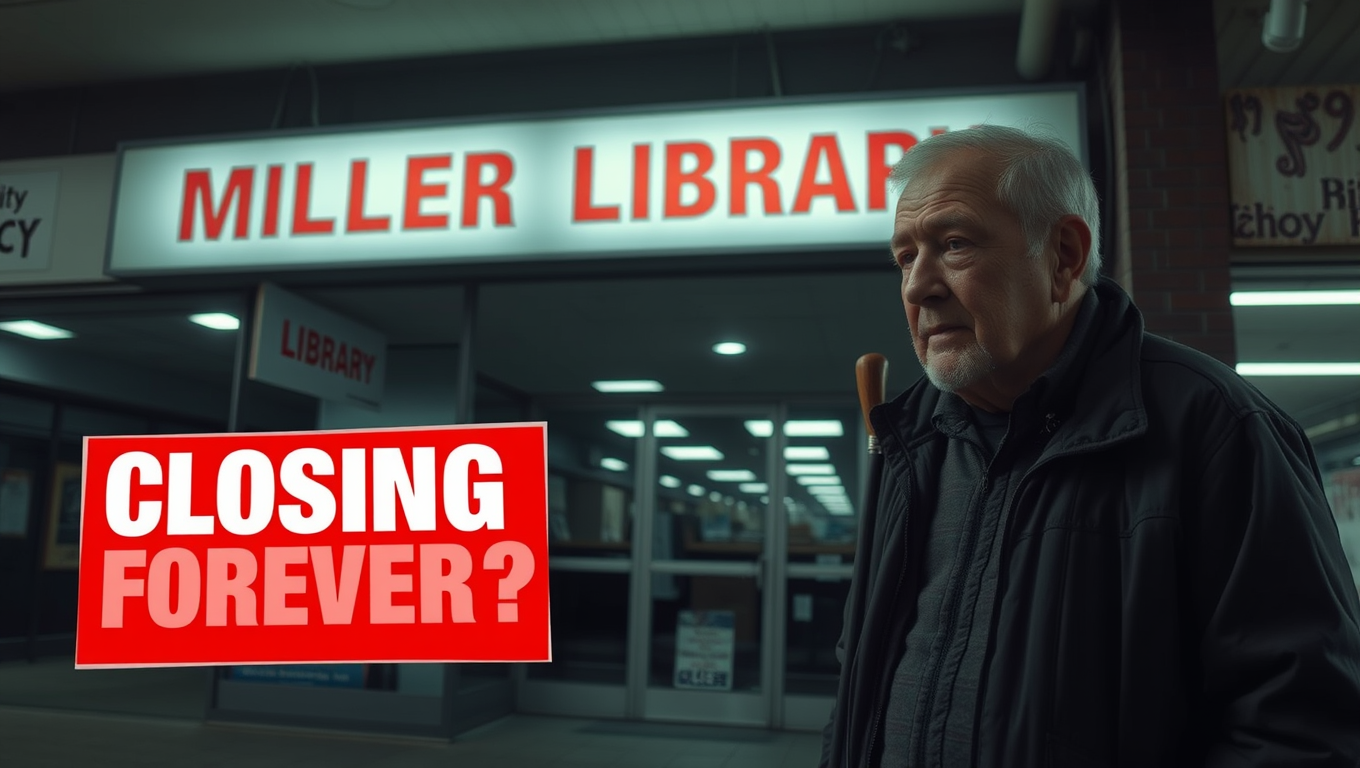

Next Wednesday, Liverpool City Council will sit down to discuss a document known as COM 04. On the surface, it reads like standard bureaucratic housekeeping: a lease is expiring in November 2026, the floor space is a bit cramped, and there are “efficiency considerations” to be made. But read between the lines, and a much starker story emerges. The Council is weighing up the closure of Miller Library—a move that threatens to sever a critical digital lifeline for one of Sydney’s most disadvantaged communities.
The official report, penned by the Manager of Library & Museum Services, presents two options for the elected officials. Option 1 suggests transitioning the space to a smaller, technology-focused hub. Option 2 is a blunt instrument: discontinue the service entirely, save $91,000 a year on rent, and tell locals to walk the two kilometres to Green Valley Library.
For a council whose stated strategic objective is to deliver “vibrant parks, community hubs, services and facilities that improve liveability,” Option 2 feels less like a strategic improvement and more like an abandonment of those who need these public services the most. Since opening its doors in 1967, Miller Library has never faced a permanent closure threat of this magnitude. Now, under the guise of asset management combined with incompetent leadership, a community’s access to the modern world is on the chopping block.
The Hidden Truth in the Data
To understand why closing Miller Library would be so devastating, you have to look past the traditional, antiquated metrics of what makes a library “successful” and look at how the community actually uses the space.
The Book Borrowing Illusion
The Council’s report leans heavily on the fact that Miller has low membership and borrowing rates compared to its glossier neighbours. With just 2,507 members and 9,517 annual loans, it pales in comparison to Carnes Hill’s 142,548 loans or Green Valley’s 26,851. If a library is judged solely as a warehouse for physical books, Miller looks highly expendable on a spreadsheet.
But that is a fundamentally flawed way to measure this specific facility’s worth.
The Digital Lifeline
Buried in the very same Council data is a staggering statistic that completely changes the narrative: Miller Library recorded 7,707 internet use sessions last year. That is 139% of the internet usage at the much larger Green Valley branch (which saw only 5,551 sessions).
Miller Library isn’t failing as a traditional library; it has organically evolved into something far more crucial. It operates as a high-demand digital access hub. The community isn’t walking through those doors in the Miller Shopping Centre just to browse the latest fiction—they are going there to survive in a digital-first society.
A Community on the Edge
Postcode 2168 is not just any suburb. According to the 2021 Census, Miller experiences severe, overlapping dimensions of socio-economic disadvantage, ranking in the lower half of the national distribution (SEIFA Index 931).
- Income and Housing: The median weekly household income is just $825, the lowest in the postcode. When families are struggling to pay rent and put food on the table, a $70-a-month NBN connection is a luxury they simply cannot afford.
- Educational Barriers: Nearly 16% of residents have a Year 9 education or below—more than double the NSW average.
- Cultural Diversity: Over 57% of households speak a language other than English at home, and 54.6% of residents have both parents born overseas.
- Ageing Population: Nearly 24% of the population is aged between 40 and 64, a demographic that research consistently shows experiences higher digital anxiety and lower digital competency.
For a newly arrived migrant trying to navigate the labyrinth of government portals, an older resident trying to access telehealth services, or a single parent helping their child with online homework, the free Wi-Fi and public computers at Miller Library aren’t just convenient. They are essential infrastructure.
The Human Cost of “Consolidation”
Bureaucrats love the word “consolidation.” It sounds clean, efficient, and logical. The Council’s Option 2 suggests residents can simply access services through the nearby Green Valley Library, allowing staff to be redeployed to fix rostering headaches elsewhere in the network.
The Geography of Disadvantage
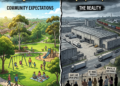
In reality, the two-kilometre trek to Green Valley is a massive, often insurmountable barrier for the elderly, the disabled, and low-income families without reliable private transport. When you remove a local service in a disadvantaged area, you don’t just neatly shift the users to a new location; you lose the most vulnerable ones entirely.
Recent research from the Annenberg Institute examining hundreds of library closures paints a grim picture. When public libraries close, the negative impacts on educational performance, public health, and social cohesion are immediate and measurable. These effects are always most pronounced in low-income districts, where students lose their only quiet, internet-enabled study spaces.
Information Redlining
Scholars refer to this phenomenon as “information redlining”—the systematic, structural exclusion of disadvantaged populations from digital access. By shutting down Miller Library to save $91,000 in lease payments, the Council would be effectively cutting off 7,707 internet sessions a year.
Where do those people go? The single mother needing to print a resume, the elderly man trying to pay a utility bill online, the high school student researching a project—they are left stranded. The Council’s internal report boldly claims there is “no risk associated with this report.” But the social risk of creating a digitally excluded underclass in Miller is immense, directly contradicting the social justice principles outlined in the Local Government Act.
💡 A Better Way Forward: The Tech Hub Solution
The ultimate tragedy here is that the Council doesn’t need to choose between financial responsibility and abandoning the Miller community. The evidence points clearly to a third, highly effective path that achieves both.
The Option 1 Alternative
Option 1 in the Council’s report suggests investigating a “technology-focused service model.” This isn’t just a compromise; it is an international best practice.
Facilities like De Krook in Belgium or the Calgary Central Library prove that smaller, tech-focused hubs can operate at a fraction of the cost of traditional libraries while delivering immense community value. By downsizing to a smaller, Council-owned space (perhaps 100 square metres), the Council could eliminate the exorbitant commercial lease entirely.
Furthermore, by shifting the bulk of the physical book collection to Green Valley via a modern “click and collect” model, Miller could focus entirely on what its community actually uses: computer stations, free Wi-Fi, and digital literacy programs.
The Financial Reality
Currently, the library costs about $249,314 a year to run, with $158,000 of that swallowed by traditional staffing models. A tech hub model, supported by a part-time professional coordinator and trained volunteer digital mentors, could bring the total annual cost down to between $125,000 and $165,000.
Here is a clear breakdown of how the two options on the Council’s table stack up against the evidence
| Proposed Action | Financial Impact | Community Impact | Strategic Alignment |
|---|---|---|---|
| Option 1: Tech-Focused Hub | Saves $84k–$124k annually | Maintains critical digital access for vulnerable groups | High: Aligns with modern library trends and equity goals |
| Option 2: Complete Closure | Saves $91k lease + staffing | Devastating: Eliminates the only free digital access point | Low: Contradicts social justice principles in LG Act |
The evidence overwhelmingly supports keeping the lights—and the routers—on in Miller.
The upcoming Council meeting isn’t just about a lease expiry in a tired shopping centre. It is a fundamental test of Liverpool Council’s priorities. They can look at a community battling severe disadvantage and decide that $91,000 is too high a price to keep them connected to the modern world. Or, they can look at the data, see the 7,707 times their most vulnerable residents reached out for a digital lifeline, and choose to innovate rather than amputate.
We discussed the potential closure of Miller Library on The Pulse (press play below)












Closing Miller library should not be an option, Liverpool council spends way too much on festivals for migrants that DO NOT want to integrate with the Australian way of life. The people that use this library needs its services. I quite often go to Green Valley or Carnes Hill to borrow books rather than wait for them to be transferred to Miller. I wish I had just been waiting for them to come to Miller. I know a number of elderly Miller residents that cannot get to other libraries & the new Liverpool library is not near any public transport, the location is a joke 😡😡