







Western Sydney communities are losing hundreds of millions to electronic gaming machines while wealthier suburbs escape the burden
The latest numbers tell a story that community advocates have been shouting about for years, but new quarterly data paints an even starker picture of how electronic gaming machines are systematically draining wealth from some of Sydney’s most vulnerable communities.
Between June and September 2025, residents of Fairfield and Liverpool lost a staggering $216 million to poker machines in clubs and hotels combined. To put that in perspective, that’s enough money to build three new schools, fund 2,000 full-time aged care workers for a year, or provide emergency relief payments to every household in both local government areas.
But the raw figures only tell part of the story. When you examine the concentration of gaming machines and compare these western Sydney communities to their more affluent counterparts, a disturbing pattern emerges—one that suggests poker machines aren’t just a harmless form of entertainment, but a mechanism that perpetuates disadvantage and keeps struggling communities trapped in a cycle of poverty.
The Numbers Don’t Lie
According to the latest quarterly reports from Liquor & Gaming NSW, Fairfield’s clubs alone generated $127.6 million in net profit from poker machines during the three-month period ending August 2025. Add the $60.1 million lost in Fairfield’s hotels during the following quarter, and you’re looking at $187.7 million extracted from a community of just over 208,000 people.
Liverpool’s story is similarly grim. The area’s clubs took in $28.8 million in net profit during the June-August period, while hotels added another $31.4 million in the July-September quarter, bringing the combined total to $60.2 million from a population of 233,446.
Together, these two neighbouring local government areas lost approximately $247.9 million to poker machines in overlapping quarterly periods—money that could have circulated through local businesses, paid down mortgages, funded children’s education, or simply kept families afloat during a cost-of-living crisis.
But here’s where the story becomes even more troubling: Fairfield and Liverpool don’t just lose more money in absolute terms—they’re also saturated with far more gaming machines per capita than wealthier areas.
A Tale of Two Cities
The contrast between western Sydney and the more affluent eastern suburbs and north shore couldn’t be more stark.
Fairfield has 3,306 poker machines in its clubs and 507 in its hotels—a total of 3,813 machines serving a population of 208,475. That works out to 1,829 gaming machines per 100,000 people when you combine both venues types.
Liverpool has 1,049 club machines and 367 hotel machines—1,416 in total for 233,446 residents, or approximately 607 machines per 100,000 people.
Now compare that to Mosman, North Sydney, and Woollahra—three of Sydney’s wealthiest postcodes. Combined, these areas have just 344 club machines and 369 hotel machines (713 total) serving a population of 150,775. That’s a rate of approximately 473 machines per 100,000 people.
Ku-ring-gai and Willoughby, home to some of Sydney’s most expensive real estate, have a combined rate of just 315 machines per 100,000 residents when you look at their club data.
The pattern is unmistakable: the less money a community has, the more poker machines are placed there. Fairfield residents face nearly four times the concentration of gaming machines compared to residents of the wealthiest suburbs.
The Poverty Tax
Gambling researchers have long described poker machines as a “poverty tax”—a form of regressive taxation that disproportionately impacts those who can least afford it. The data from Fairfield and Liverpool provides compelling evidence for this characterisation.
In Fairfield, the average loss per adult resident (assuming an adult population of roughly 70% of the total) works out to approximately $1,286 over the combined quarterly periods analysed. In Liverpool, it’s around $368 per adult over the same timeframe.
These aren’t small amounts for families already struggling with rising rents, grocery bills, and energy costs. For many households in these areas, that money represents the difference between keeping up with bills and falling behind, between having a safety net and living on the edge of crisis.
The human cost extends far beyond the immediate financial loss. Problem gambling is associated with increased rates of family breakdown, domestic violence, mental health issues, child neglect, and even suicide. When a parent or partner develops a gambling addiction, the entire family suffers.
Community services in western Sydney report seeing increasing numbers of families seeking emergency relief because gambling has consumed the household budget. Food banks, financial counselling services, and crisis accommodation providers all identify gambling as a significant factor in the cases they handle.
The Revenue Paradox
Defenders of the poker machine industry often point to the tax revenue generated and the community contributions made by clubs. It’s true that the gaming machines in Fairfield generated $31 million in tax during the club reporting period, while Liverpool’s machines contributed $6.5 million.
But this argument collapses under scrutiny. The tax collected represents only a fraction of the money lost by residents—roughly 16-23% depending on the venue type and profit levels. The remaining 77-84% either becomes profit for venue operators or covers their costs, meaning the vast majority of money lost to poker machines leaves the local economy entirely or concentrates in the hands of club management and hotel owners.
Furthermore, the social costs of problem gambling far exceed the tax revenue collected. A 2017 study by the Victorian Responsible Gambling Foundation estimated that each problem gambler costs the community between $1,400 and $2,500 per year in social services, healthcare, lost productivity, and criminal justice expenses. With thousands of gaming machines concentrated in areas like Fairfield and Liverpool, the number of problem gamblers is inevitably higher, meaning the true cost to these communities likely dwarfs any tax benefit.
Even the community contributions made by clubs—often cited as justification for their poker machine revenue—pale in comparison to the harm caused. While clubs do support local sports teams and community groups, these contributions typically represent a tiny fraction of their gaming machine profits. It’s rather like a pickpocket donating a few coins to charity after stealing someone’s wallet.
How Did We Get Here?
The concentration of poker machines in disadvantaged areas isn’t an accident—it’s the result of decades of policy decisions that have prioritised industry profits over community wellbeing.
When poker machines were first legalised in NSW clubs in 1956, they were relatively limited in number and sophistication. But deregulation in the 1990s opened the floodgates. Betting limits were increased, machine numbers expanded dramatically, and technological advances made the machines far more addictive.
Crucially, the regulatory framework allowed market forces to determine where machines would be located. Clubs and hotels naturally sought locations where they could maximise revenue, which meant targeting areas with high foot traffic and, unfortunately, populations more vulnerable to gambling harm.
The result is the geographic inequality we see today. Wealthier areas, with more political influence and stronger community opposition, have successfully resisted the proliferation of poker machines. Residents in suburbs like Mosman and Woollahra have the resources, education, and social capital to fight development applications for new gaming venues or expansions of existing ones.
In contrast, communities like Fairfield and Liverpool—often dealing with language barriers, lower rates of civic engagement, and less access to legal resources—have been less able to resist. The gaming industry has filled the vacuum, establishing a dense network of venues that now seems almost impossible to dislodge.
The Addiction by Design
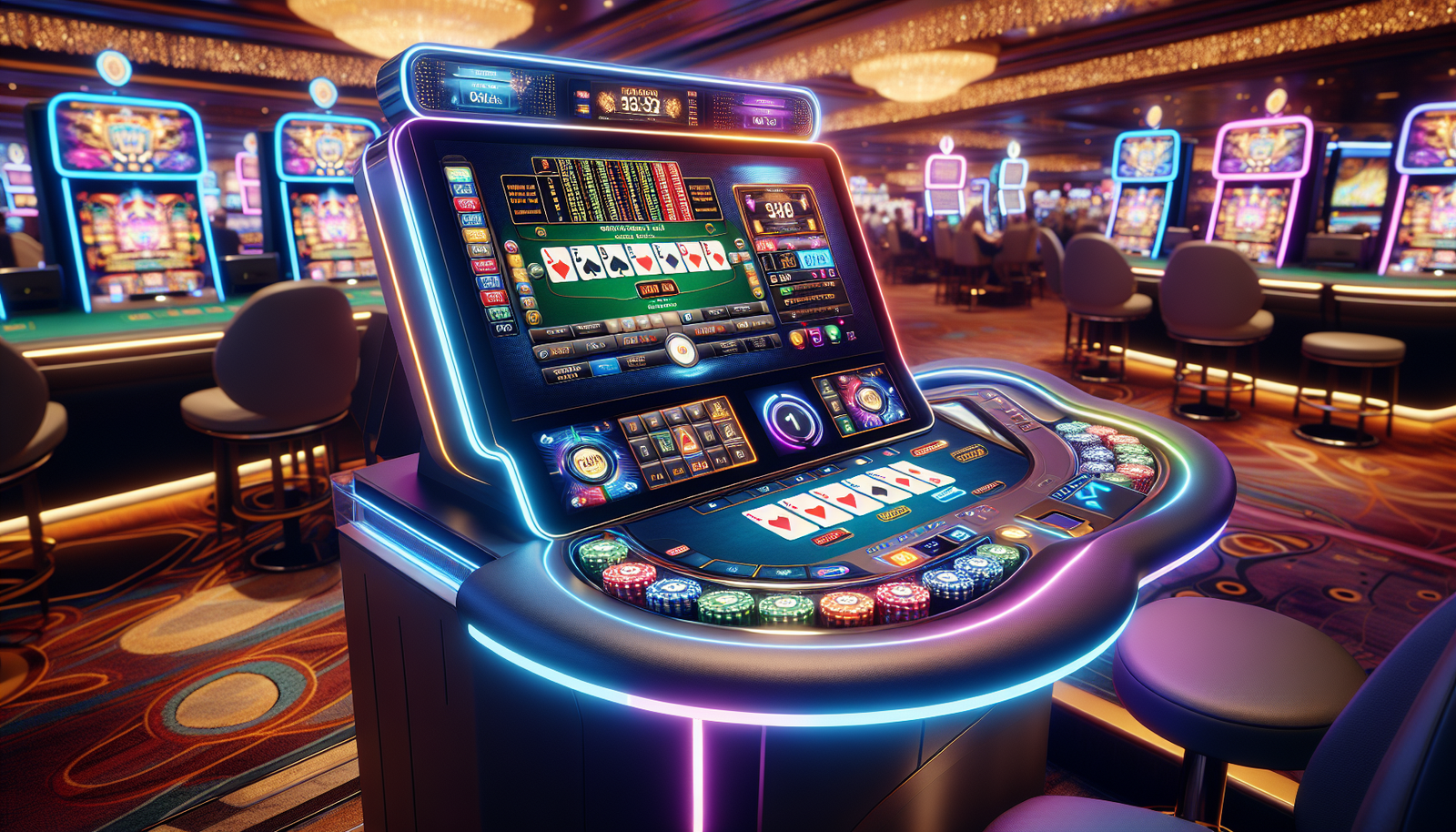
Modern poker machines aren’t the mechanical one-armed bandits of yesteryear. They’re sophisticated psychological instruments designed to maximise “time on device”—industry jargon for keeping players gambling as long as possible.
Everything about their design is calculated to encourage continuous play: the absence of clocks and windows in gaming rooms, the comfortable seating, the loyalty card systems that track your play, the near-miss symbols that create the illusion you almost won, and the rapid spin rates that can consume hundreds of dollars per hour.
Research has shown that poker machines are the most addictive form of gambling, responsible for the majority of gambling-related harm. Unlike sports betting or lottery tickets, pokies offer immediate gratification and continuous betting opportunities, creating a trance-like state that researchers call the “machine zone.”
In this zone, players report losing track of time, money, and even their surroundings. It’s not about winning—it’s about escaping into the rhythm of the machine. For people dealing with financial stress, trauma, social isolation, or mental health issues—all more prevalent in disadvantaged communities—this escape can be powerfully attractive.
The concentration of these machines in areas like Fairfield and Liverpool means residents face constant exposure and temptation. In some streets, you can’t walk 500 metres without passing a venue filled with poker machines. For someone trying to overcome a gambling problem, or vulnerable to developing one, this environment is toxic.
The Venues’ Defence
When confronted with these figures, the gambling industry typically offers several defences. They argue that clubs provide important community spaces, that most people gamble responsibly, that they have harm minimisation measures in place, and that adults should be free to make their own choices.
There’s a grain of truth in some of these points. Many clubs do serve as community hubs, offering affordable meals, entertainment, and meeting spaces. The majority of people who use poker machines don’t develop serious problems. And personal freedom is an important value.
But these arguments ignore the fundamental issue: the current system is designed to extract maximum revenue from a minority of vulnerable people. Industry data suggests that roughly 40% of poker machine revenue comes from problem gamblers—people who have lost control of their gambling and are causing serious harm to themselves and their families.
This isn’t a free market operating fairly. It’s a system that profits from addiction, and it’s deliberately concentrated in communities that can least afford the cost.
The “harm minimisation” measures venues are required to implement—such as clocks, pre-commitment systems, and self-exclusion programmes—are largely ineffective. They’re the equivalent of putting a small warning label on a product designed to be as addictive as possible. Research consistently shows these measures have minimal impact on problem gambling rates.
What Other Communities Have Done
The situation in Fairfield and Liverpool isn’t inevitable. Other communities in Australia and around the world have successfully pushed back against poker machine proliferation.
In 2001, the ACT government introduced a cap on poker machine numbers and began gradually reducing them. The result has been a steady decline in gambling losses without any apparent negative impact on community life or club viability.
Several NSW councils have used their planning powers to restrict new poker machine venues or limit expansions. While they can’t remove existing machines, they can prevent the problem from getting worse.
Some clubs have voluntarily reduced their poker machine numbers or removed them entirely, finding that they can operate successfully with revenue from other sources like dining, entertainment, and traditional club activities.
Internationally, Norway removed all poker machines from clubs and pubs in 2007, replacing them with less addictive alternatives in a limited number of regulated venues. Problem gambling rates dropped dramatically.
These examples prove that change is possible—but it requires political will and community pressure.
The Path Forward
So what can be done about the poker machine crisis in Fairfield and Liverpool?
First, both communities need to recognise this as a public health emergency. The amount of money being lost—nearly a quarter of a billion dollars in just a few months—represents a massive transfer of wealth from struggling families to an industry that produces nothing of value in return.
Local councils should use every planning and regulatory tool available to prevent any increase in poker machine numbers. Every new machine is another potential source of harm.
State government needs to introduce genuine reforms: mandatory pre-commitment systems that actually limit losses, reduced betting limits, slower spin rates, and ultimately a reduction in machine numbers, particularly in areas of disadvantage.
The tax structure should be reformed so that communities bearing the burden of poker machines receive a much larger share of the revenue, which should be quarantined for gambling harm services and community development.
Most importantly, we need to reject the industry narrative that poker machines are just harmless entertainment. The data from Fairfield and Liverpool tells a different story—one of systematic exploitation, of communities being drained of resources they desperately need, of families torn apart by addiction.
Following the Money
When you follow the money, the picture becomes even clearer. The $187.7 million lost by Fairfield residents and $60.2 million lost by Liverpool residents doesn’t disappear into thin air. It flows upward—to club executives earning six-figure salaries, to hotel owners expanding their property portfolios, to poker machine manufacturers and maintenance companies, and to the state government in the form of taxes.
Very little of it stays in the local community. The local café doesn’t see that money. The struggling family business doesn’t benefit. The children who go without school excursions or new shoes because mum or dad is “just having a quick flutter” don’t get that money back.
This is how you keep a community poor. You don’t need overt discrimination or explicit policies of disadvantage. You simply need to concentrate addictive gambling products in areas where people are already struggling, then step back and let the machines do their work.
Every dollar fed into a poker machine is a dollar that doesn’t go toward building a better future. Multiply that by millions of dollars, year after year, and you create a permanent drag on community prosperity.
A Question of Justice
Ultimately, the poker machine crisis in western Sydney is a question of justice. Is it fair that residents of Fairfield face four times the concentration of gambling machines as residents of Mosman? Is it acceptable that communities already dealing with lower incomes, higher unemployment, and less access to services should also bear the burden of predatory gambling?
The data suggests that our current system fails this basic test of fairness. Poker machines are concentrated where they cause the most harm, generating profits for industry and tax revenue for government while devastating the communities that host them.
Fairfield and Liverpool deserve better. Their residents work hard, contribute to the economy, and want the same opportunities for their children as families in wealthier suburbs. But as long as poker machines continue to drain hundreds of millions of dollars from these communities every year, that aspiration will remain out of reach for many.
The first step toward change is recognising the problem for what it is: not a matter of personal responsibility or entertainment choice, but a systemic issue of exploitation and inequality. The numbers are there in black and white, in the quarterly reports published by Liquor & Gaming NSW. The question is whether we have the courage to act on what they tell us and finally put people before profit
If you or someone you know is struggling with gambling, help is available. Contact Gambling Help on 1800 858 858 or visit www.gamblinghelp.nsw.gov.au for free, confidential support.